
Last Updated: August 12, 2026
ChooseMyPlate was the guide that finally made healthy eating click for me, and I still check it years later. Back in 2011, the USDA replaced the confusing food pyramid with a simple plate icon. Today the program lives on at MyPlate.gov, and it still answers one question simply: what should you actually put on your plate? This article walks through the whole system, the free tools, and how to build a better plate tonight.
Table of Contents
- What Was ChooseMyPlate?
- From Pyramid to Plate: A Quick History
- The Plate Sections Explained
- The Free MyPlate Tools Worth Using
- How to Build a Plate Tonight
- Portion Sizes Without Measuring
- Using the Plate on a Budget
- Common Mistakes People Make
- Frequently Asked Questions
- The Bottom Line
Key Takeaway: ChooseMyPlate teaches one simple habit: fill half your plate with fruits and vegetables, then split the rest between protein and grains. That single rule beats most diet plans.
What Was ChooseMyPlate?
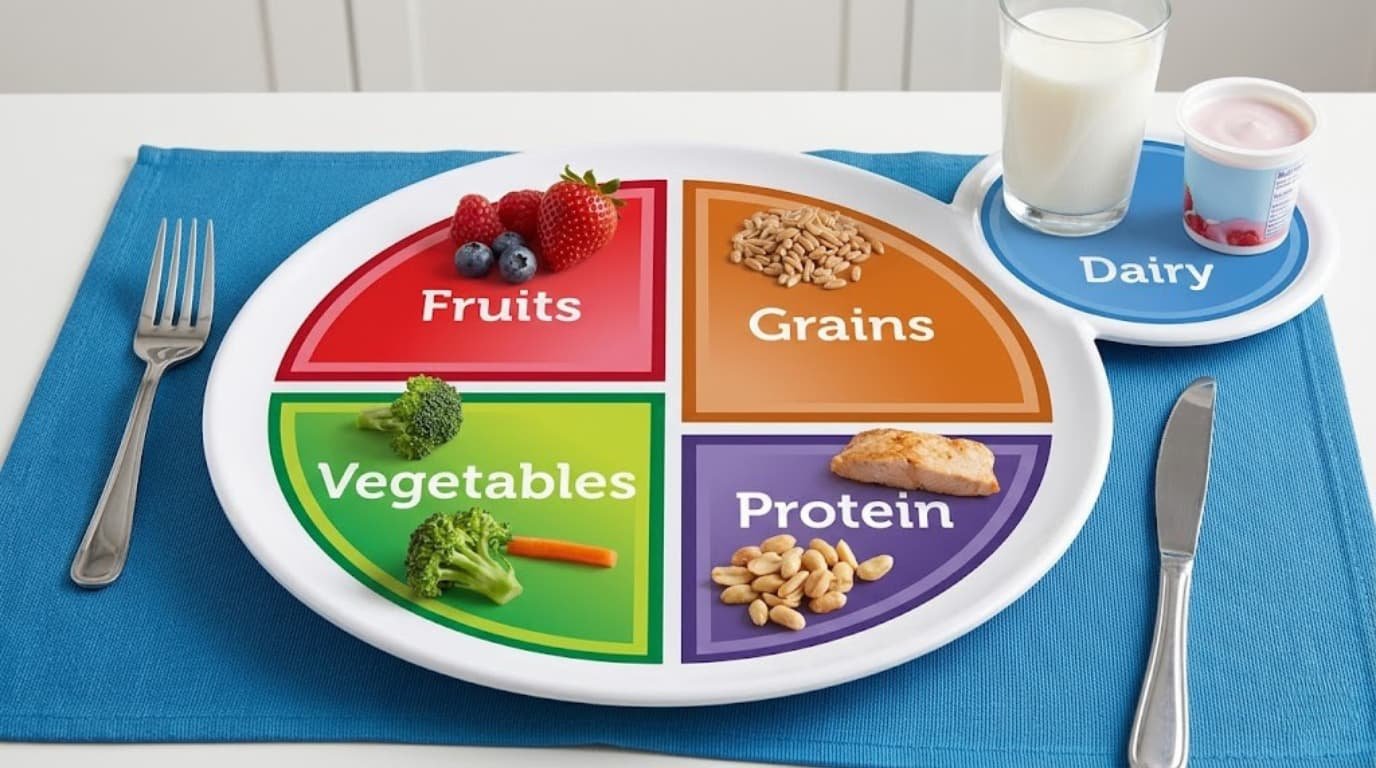
ChooseMyPlate is the USDA’s simple plate guide that shows what a healthy meal looks like: half produce, a quarter protein, and a quarter grains. It replaced the food pyramid in 2011. The pyramid was hard to read, layered, and confusing, so the agency designed a dinner plate graphic that showed proportions at a glance. It became one of the most recognized nutrition symbols in America, and for good reason: a plate is something everyone already understands.
The name shifted over time as the program evolved into MyPlate, but the message stayed identical. If you still search for ChooseMyPlate today, the official links will point you to MyPlate.gov, where all the original tools still live, upgraded and free.
From Pyramid to Plate: A Quick History
The food pyramid first arrived in 1992 and tried to show healthy eating as a stack of tiers. In theory the widths represented serving sizes, but in practice nobody could remember what the layers meant. Surveys kept showing that people found it confusing, so the USDA went back to the drawing board.
In June 2011, along with the Let’s Move campaign led by first lady Michelle Obama, the USDA unveiled the plate. The design was intentional: they chose an object every American uses daily. Proportions were based on the Dietary Guidelines for Americans, and the message changed from “follow the pyramid” to “build your plate.” That tiny wording shift made healthy eating feel possible for families.
The plate also got a companion campaign of recipes, videos, and classroom resources, which helped teachers and parents spread the habit at school and at home. Millions of plates were built and shared under the ChooseMyPlate banner before the name evolved, which means the idea has billions of meals of real-world proof behind it.
Understanding this history matters because it explains why the plate is so simple. It was designed to fix a public confusion problem, not to impress nutritionists. And simple wins, which is why the plate stuck while the pyramid faded.
The Plate Sections Explained
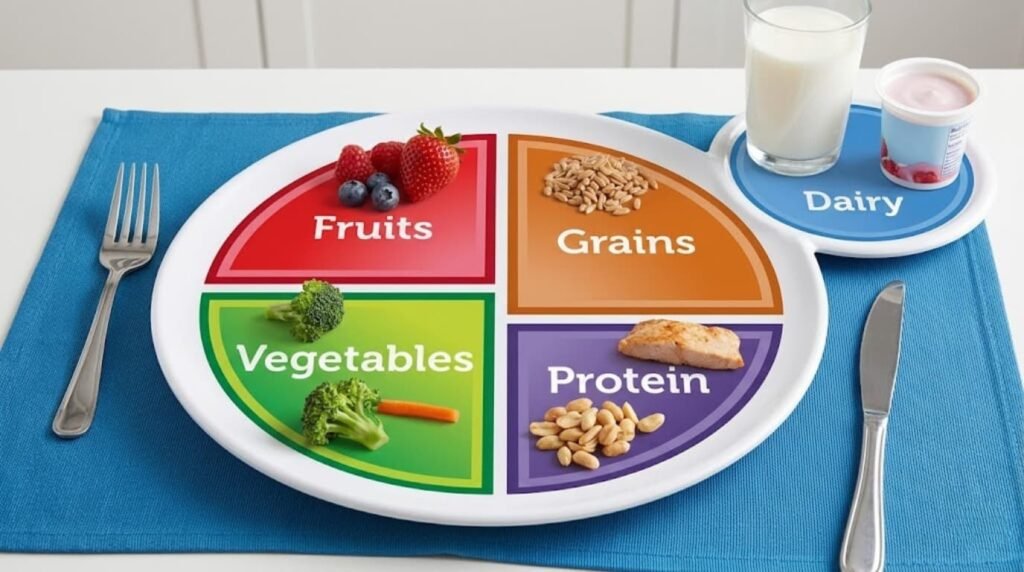
The plate is split into four sections, each representing a food group, with a dairy cup on the side:
- Fruits take roughly one quarter of the plate.
- Vegetables take roughly one quarter of the plate.
- Grains take about one quarter, ideally whole grains.
- Protein takes about one quarter, lean sources preferred.
- Dairy sits beside the plate, like a glass of milk.
The beauty is that the plate teaches proportion without scales or math. Every meal becomes a five-second visual check, and that is all most families need to create lasting balance.
The Free MyPlate Tools Worth Using
MyPlate.gov offers free tools that used to live under the ChooseMyPlate name. The star is the MyPlate Plan tool, which personalizes daily portions from your age, height, weight, and activity level. There are also menus, a recipe finder, and printable grocery lists. I entered my details once and kept the result saved in my notes for years.
- Open the MyPlate Plan tool on the official website.
- Enter your details. Age, height, weight, and activity.
- Save your daily plan. It lists portions per food group.
- Check meals against it. No calorie counting needed.
These tools follow the exact ChooseMyPlate logic, just with a cleaner modern look. They turn the plate from a concept into specific numbers for your body, which makes the habit far easier to follow.
How to Build a Plate Tonight
You do not need to wait for a healthy eating season to start. You can build a balanced plate tonight with whatever is in your kitchen:
- Start with vegetables. Fill half the plate with them.
- Add fruit as a side or a natural dessert.
- Add a fist-sized grain. Rice, pasta, or bread.
- Add a palm-sized protein. Chicken, beans, or fish.
- Pour a dairy serving. Milk or yogurt to the side.
Do that tonight and you will already be eating closer to the official recommendations than most Americans. The plate does not care if the meal is pasta night or a stir-fry, the proportions are the same.
Portion Sizes Without Measuring
The plate is designed to remove measuring cups entirely. Instead of weights, you use your own hand:
- Your palm equals one serving of protein.
- Your fist equals about one serving of grains.
- Your thumb equals a serving of fats like nut butter.
- Two cupped hands hold the vegetables you want.
Because your hand scales with your body size, it naturally adjusts portions for kids, adults, and athletes. That is the quiet genius of the plate: the measuring tool travels with you.
Using the Plate on a Budget
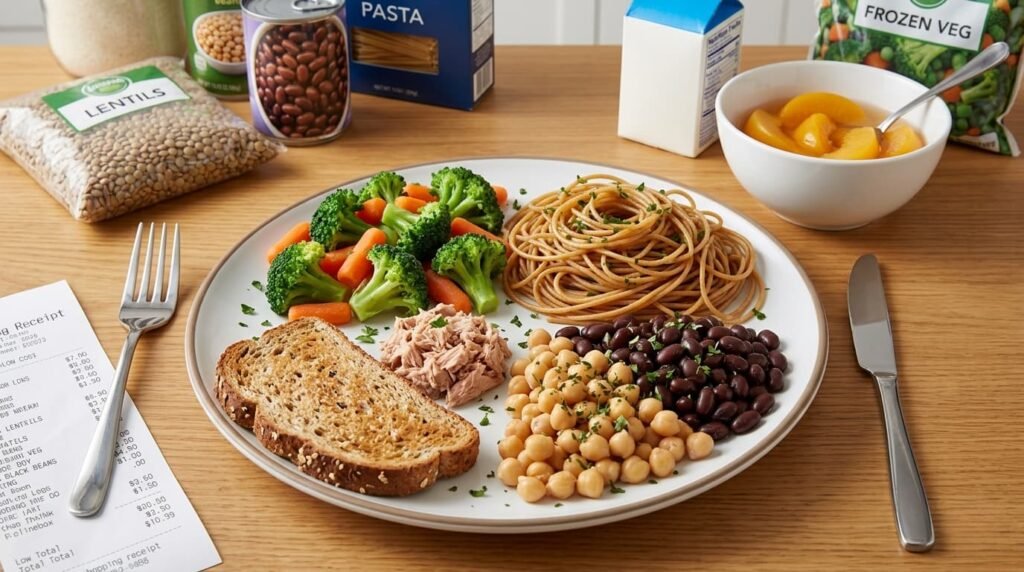
Healthy eating worries many families because they assume fresh food is expensive. The plate does not demand exotic groceries. Frozen vegetables are as nutritious as fresh and usually much cheaper, and canned beans, lentils, and eggs are some of the most affordable proteins available.
Plan meals around what is on sale, buy rice and oats in bulk, and use the plate proportions to decide what fills each section rather than which brand to buy. A budget plate and an expensive plate look nearly identical; the difference is just marketing. Following ChooseMyPlate proportions protects your health and your wallet at the same time.
Why the Plate Still Matters
The numbers behind the plate are sobering, and they explain why the USDA built it in the first place. According to the Dietary Guidelines for Americans, about 90 percent of Americans eat too few vegetables and 80 percent eat too little fruit. The average American diet scores just 56 out of 100 on the federal Healthy Eating Index, meaning most of us are missing a lot of the foods the plate shows. Only one in five adults meets fruit and vegetable recommendations at all.
That gap is exactly what the plate was designed to close, by turning a vague target into something you can see on your own dinner table. And the good news is that closing it is not expensive: a 2024 USDA analysis found you can meet the daily fruit and vegetable targets for about two to three dollars a day by choosing seasonal and frozen options.
Even better, the ERS found that people who simply know about MyPlate tend to eat more fruit and vegetables. Awareness itself nudges behavior, which is the whole point of putting a plate on your government’s nutrition guide instead of a chart.
Common Mistakes People Make
Even a simple plate has room for mistakes. Here are the ones I see most often:
- Turning the plate into a strict ruler. One unbalanced meal is fine.
- Ignoring the dairy side and missing calcium.
- Choosing refined grains over whole ones.
- Letting sauces double the calories without noticing.
- Forgetting that fruit is part of the plate, not just dessert.
The fix for each mistake is the same: glance at the plate, adjust the next meal, and move on. The plate is a guide, not a judge.
How the Plate Fits Your Real Life
The best thing about the plate is how well it bends around real routines. Busy weeknights call for the ten-minute version: a bag of frozen vegetables, rice from a cooker, and a quick protein. Dining out works too, because the proportions carry over to the restaurant plate: ask for extra vegetables and take half the grains home. School lunches, work cafeterias, even holiday buffets all have a version of the plate hidden inside them.
The plate also works with any eating style. Vegetarians fill the protein section with beans, lentils, or tofu. Vegans swap the dairy side for fortified plant milk. Gluten-free eaters choose rice, quinoa, or oats. The proportions never change, only the ingredients, and that flexibility is why the guide has lasted for over a decade.
Frequently Asked Questions
Is ChooseMyPlate still the official guide?
The program now runs as MyPlate, and ChooseMyPlate links redirect to MyPlate.gov. The plate guidance itself is unchanged.
What replaced the food pyramid?
The USDA replaced the pyramid with MyPlate in 2011, choosing a simple plate image over the complex tiers.
How much of each food group should I eat?
Half your plate fruits and vegetables, a quarter grains, a quarter protein, plus a dairy serving. It is that simple.
Can I use ChooseMyPlate for weight loss?
Yes. The proportions naturally lower calories, and the free MyPlate Plan tool adjusts portions for your goals.
What counts as a grain on the plate?
Rice, oats, pasta, bread, and cereal. Whole grains like brown rice are the healthiest choice.
Is the plate good for families and kids?
Yes. The visual proportions teach children portion balance early, and pediatricians recommend the same plate.
Try the Five-Second Plate Check
You do not need an app to follow the plate. Try the five-second check at your next meal: look down and ask, is half of this fruits and vegetables, and is the rest split between protein and grains? If the answer is no, adjust the proportions right there, add more vegetables, shrink the grains. That single habit, repeated at every meal, is what finally made the plate stick in my kitchen.
For a personalized target, the free MyPlate Plan tool on the official site calculates exact portions from your age, height, weight, and activity in about two minutes. Save the number, check your plate against it, and let the five-second habit do the daily work.
The Bottom Line
ChooseMyPlate taught America one unforgettable rule: fill half your plate with produce and split the rest between protein and grains. That rule still works today, and the free tools at MyPlate.gov make it personal. [ADD INTERNAL LINK: complete myplate guide] and [ADD INTERNAL LINK: healthy meal prep ideas] will help you put it into practice right here.
Disclaimer: This article is for educational purposes only and is not medical advice. Consult a dietitian or doctor before changing your diet significantly.