
What Is a Home Health Aide?
A home health aide helps older adults and people with disabilities stay safe and independent in their own homes. They assist with bathing, dressing, meals, and everyday tasks. The work is personal, hands-on, and built on trust. Most aides do one thing above all: they let people keep living where they feel safest.
I still remember the day my grandmother’s aide walked in for the first time. My mom had resisted every option for months, sure a stranger would never fit Dad’s routine. By the third visit, that same woman was the only person my dad actually looked forward to seeing. That’s the real story of this profession: it runs on relationships, not paperwork. Anyone who calls it “unskilled care” has never watched a shy aide learn how to get a stubborn 80-year-old to take his medication.
A home health aide works under a written care plan and answers to a nurse or case manager. They are not nurses. They are the people who make daily life work when a family can’t be there, and the demand for them keeps climbing every year.
What Does a Home Health Aide Do?
The daily list changes with every client, but it always circles back to the same core duties:
- Personal care: bathing, dressing, grooming, and helping with the bathroom
- Mobility: getting in and out of bed, walking support, and fall prevention
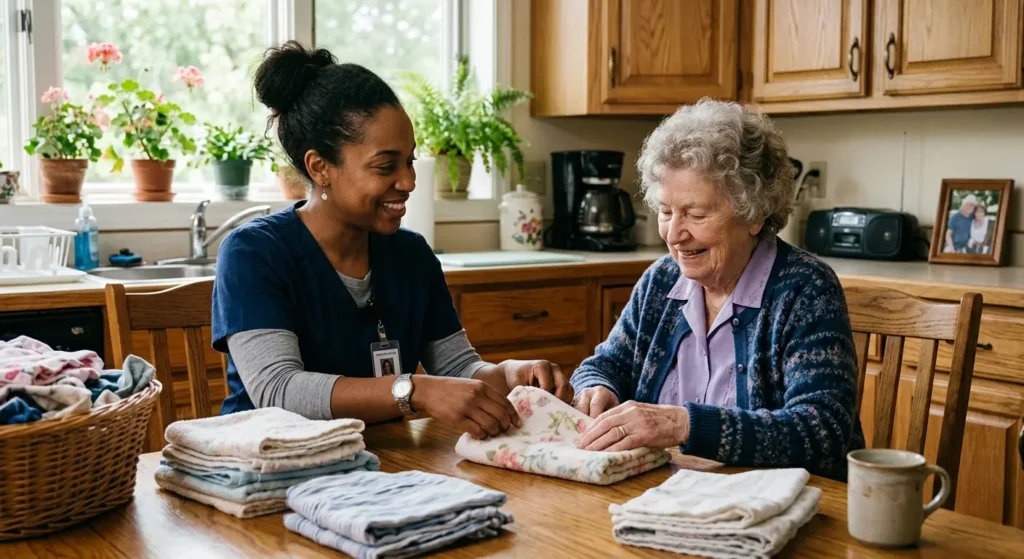
- Daily living: cooking meals, light housecleaning, laundry, and grocery runs
- Health monitoring: checking blood pressure and temperature and giving medication reminders (not giving the medication itself)
- Companionship: conversation, game nights, and the simple comfort of having someone show up
My first client, Mr. Alvarez, taught me something no textbook ever printed. He didn’t need help with his pills. He needed someone to sit with him while he ate, because eating alone reminded him of his late wife. A good aide reads between the lines of a care plan and finds the human need hiding underneath it.
Key takeaway: A home health aide is judged less by what they do than by how they make a person feel. Kindness, patience, and reliability beat every clinical skill on the list.
Where a Home Health Aide Cannot Help
Honesty matters here, so here is the boundary. A home health aide cannot give injections, change wound dressings, manage IV lines, or decide your loved one’s treatment. Those tasks belong to nurses, and any agency that asks an aide to cross that line is a red flag. Aides offer hygiene, safety, and daily living support. That split is actually a comfort: your family knows exactly what is covered and what needs a medical professional.
How Much Does a Home Health Aide Make?
The Bureau of Labor Statistics reports a median annual wage of $34,900 for home health and personal care aides as of May 2024. The lowest-paid 10% earned under $25,600, while the top 10% pulled in more than $44,190. Hourly pay usually lands between $16 and $18, and it varies a lot by state.
| Setting | Median Annual Wage (BLS, May 2024) |
|---|---|
| Residential disability facilities | $36,400 |
| Assisted living communities | $36,280 |
| Home healthcare services | $35,250 |
| Individual and family services | $34,600 |
The outlook is the real headline. BLS projects 17% job growth from 2024 to 2034, much faster than the average occupation, with roughly 765,800 openings every year. An aging population and the rising preference for home care over nursing homes keep pushing that number up. Pay is not dazzling, but security is: this work will be needed for decades.
What Home Health Aide Care Costs Families
If you are reading this as a family member, here is the number that usually stings. Private-pay home health aide care runs from $25 to $35 an hour, with a cautious national benchmark near $33. At 10 hours a week, expect about $1,400 per month; at 20 hours, closer to $2,900.
Before you panic over those figures, check the coverage picture, because most families never do:
- Medicare covers a home health aide only during a covered home health episode, when you are homebound and receiving skilled nursing or therapy. It does not pay for long-term custodial care at home.
- Medicaid often covers home aide services with $0 out of pocket for households that qualify, including many middle-class seniors.
- VA benefits and long-term care insurance can fill the gap depending on your situation.
Key takeaway: Check Medicaid and VA eligibility before you pay privately. I’ve watched families spend thousands of dollars a month for years while quietly qualifying for coverage the whole time.
How to Become a Home Health Aide
The path is short and cheaper than most people expect. Federal law sets a 75-hour training minimum, and many states require even more:
- Check your state’s requirements through your state health department, since hours and testing rules differ
- Enroll in a state-approved program at a community college, vocational school, or home care agency home health aide training programs near me” → your-training-cost-article]
- Finish classroom and hands-on clinical training
- Pass the competency exam, and consider the optional national MACE test to stand out
- Clear a background check, which most states require before you can work
- Get hired, then complete 12 hours of in-service training each year to stay current
Most people finish training in four to twelve weeks. I’ve trained caregivers who were on the clock a month after their first class, and a few who started with zero healthcare experience. That is the beauty of this entry point: it welcomes beginners.
Home Health Aide vs. CNA: What’s the Difference?
This confusion trips up half the people I talk to. A certified nursing assistant (CNA) has broader medical training and can check vital signs, dress wounds, and work in hospitals or nursing homes. A home health aide focuses on personal care and daily living, usually in a private home, with lighter housekeeping duties. CNAs need state certification (75 to 180 hours depending on the state); many states require no license at all for an aide.
| Home Health Aide | CNA | |
|---|---|---|
| Main workspace | Private homes | Hospitals, nursing homes |
| Medical tasks | Medication reminders only | Vital signs, wound care |
| Typical training | 75 hours minimum | 75–180 hours |
| State license | Often not required | Always required |
| Median pay | About $34,900/yr | Slightly higher |
If you want the fastest road into caregiving, an HHA route wins. If you see yourself doing more clinical work later, CNA builds a stronger bridge to nursing.
The Hard Parts Nobody Talks About
For the record, this job has a dark side that glossy career pages skip. Burnout is real. The pay is modest, the schedules are unpredictable, and the emotional weight of watching favorite clients decline takes a toll that no paycheck covers. Physical strain is constant, and the isolation of working alone in someone else’s home is heavier than people admit.
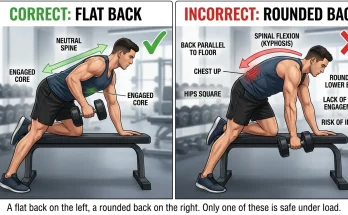
I made beginner mistakes everyone makes: lifting a client without protecting my back, saying yes to extra shifts until I was empty, and taking a client’s decline home with me at night. Here is the advice I wish someone handed me on day one:
- Learn safe transfer techniques before you lift anyone
- Refuse to skip documentation, even when you are tired
- Guard your rest like it is part of the care plan, because it is
- Find one trusted person you can debrief with at the end of rough days
The families I respect most ask about caregiver burnout before they ask about pricing. Good agencies build it into their care plans.
A Career You Can Carry for Life
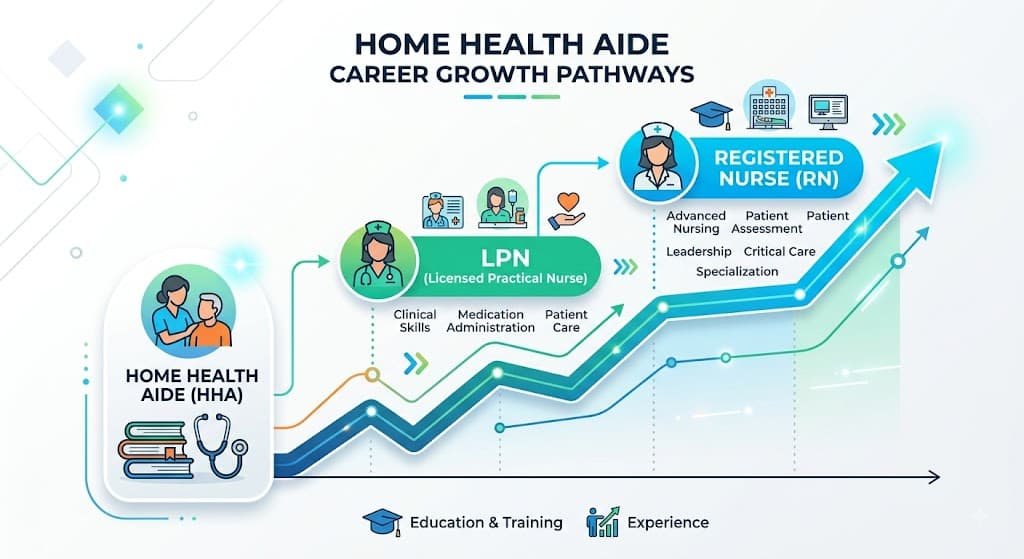
Here is the part that sold me on this field. The skills you master as a home health aide become your own quiet superpower, building your health for life. You learn body mechanics that protect your back, meal habits that changed my own eating, and a patience that spills into everything else you touch. Aide work is not a dead end. It feeds directly into careers as an LPN, registered nurse, physical therapy aide, or home care coordinator. Plenty of the nurses I know started exactly where you might start.
Common Home Health Aide Questions
Do home health aides need a license?
Not always. States set their own rules, and many do not license aides, though Medicare-certified agencies expect the 75-hour federal minimum and a passing competency test.
How long does it take to become a home health aide?
Most training programs finish in four to twelve weeks, including the hands-on clinical hours.
Can a home health aide give or administer medication?
No. Aides give medication reminders and report what they observe. Giving pills or injections is a nurse’s job by law.
Does Medicare pay for a home health aide?
Only during a covered home health episode for a homebound person receiving skilled care. Long-term daily aide care is usually not covered.
Is home health aide a good career?
For people who value stable demand and human connection over high pay, yes. Expect steady work, modest wages, and real emotional rewards.
So, Should You Become a Home Health Aide?
If your answer to “Can I show up for someone every single day?” is yes, this field will take care of you in return. The training is short, the door is open to beginners, and the need will only grow as America’s seniors age in place. It is honest work, paid modestly and rewarded deeply, one small moment of dignity at a time.
Start with one step: pull up your state’s requirements today, browse two or three approved programs, and ask an actual aide what their week looks like. Then decide with your eyes open the good parts and the hard parts both.
Ready to compare your other options? how to become a certified nursing assistant.
Disclaimer: This article is for general information only, not medical, financial, or legal advice. Wages, training hours, and coverage rules vary by state and change over time. Always verify current requirements with your state health department and check benefits with Medicare, Medicaid, or your insurer before making care decisions.