

Author Note: I’ve kept a kitchen herb bed for over six years, and half of what’s in this article came from trial and error on my own family before it ever made it into a blog post. None of this replaces medical care. It’s what worked for minor, everyday stuff at my house.
Homegrown remedies are the natural treatments you grow or keep in your own kitchen for everyday problems like a scratchy throat, a bug bite, or a stomach that won’t settle. My grandmother had a shelf of jars for this. I didn’t understand it until I had kids of my own and got tired of driving to the pharmacy at 9pm for a cold that would clear up in three days anyway.
Key takeaway: Homegrown remedies work best for mild, short-term problems. They are not a substitute for medical treatment when something is serious, worsening, or lasts more than a few days.
Table of Contents
- Why I Started Growing My Own Remedies
- Sore Throat and Cough
- Upset Stomach
- Minor Cuts, Scrapes, and Burns
- Bug Bites and Itchy Skin
- Trouble Sleeping
- Seasonal Allergies
- Herbs Worth Growing at Home
- When to Skip the Garden and Call a Doctor
- FAQs
- Conclusion
Why I Started Growing My Own Remedies
I planted my first pot of mint because a friend gave me a cutting, not because I had a plan. That one pot turned into a whole corner of the yard within two summers.
The turning point for me was a winter where my son had back to back colds. I was buying the same three products from the drugstore every other week. My neighbor, who’d been gardening for decades, handed me a bag of dried chamomile and told me to make tea instead of dosing him with cough syrup for a runny nose that wasn’t even that bad.
It worked well enough that I started paying attention to what else grows in a normal backyard that actually does something useful.
Sore Throat and Cough
Honey and ginger tea is the one I reach for first. Grate a thumb-sized piece of fresh ginger into a mug, pour hot water over it, let it sit for five minutes, then stir in a tablespoon of raw honey.

My honest take: it doesn’t cure anything. It coats your throat and takes the edge off enough that you stop coughing yourself awake at 2am. That’s the whole win, and it’s a real one.
Sage tea gargle works better for a throat that’s more sore than congested. Steep a few fresh sage leaves in hot water for ten minutes, let it cool until warm, and gargle. It tastes rough. I won’t pretend otherwise.
Do not give honey to a child under one year old. That’s not a preference, it’s a real safety rule because of infant botulism risk.
Upset Stomach
Peppermint and ginger are the two I trust here, and they do different jobs.
Ginger tea settles nausea, especially the queasy, car-sick kind of stomach upset. Peppermint tea helps more with bloating and general stomach ache after a heavy meal.
My rule of thumb: ginger for nausea, peppermint for a stomach that just feels too full. I keep both dried in jars because fresh isn’t always on hand.
One thing nobody tells you: peppermint can make heartburn worse for some people, since it relaxes the valve that keeps stomach acid down. If that’s your issue, skip it and stick with ginger.
Minor Cuts, Scrapes, and Burns
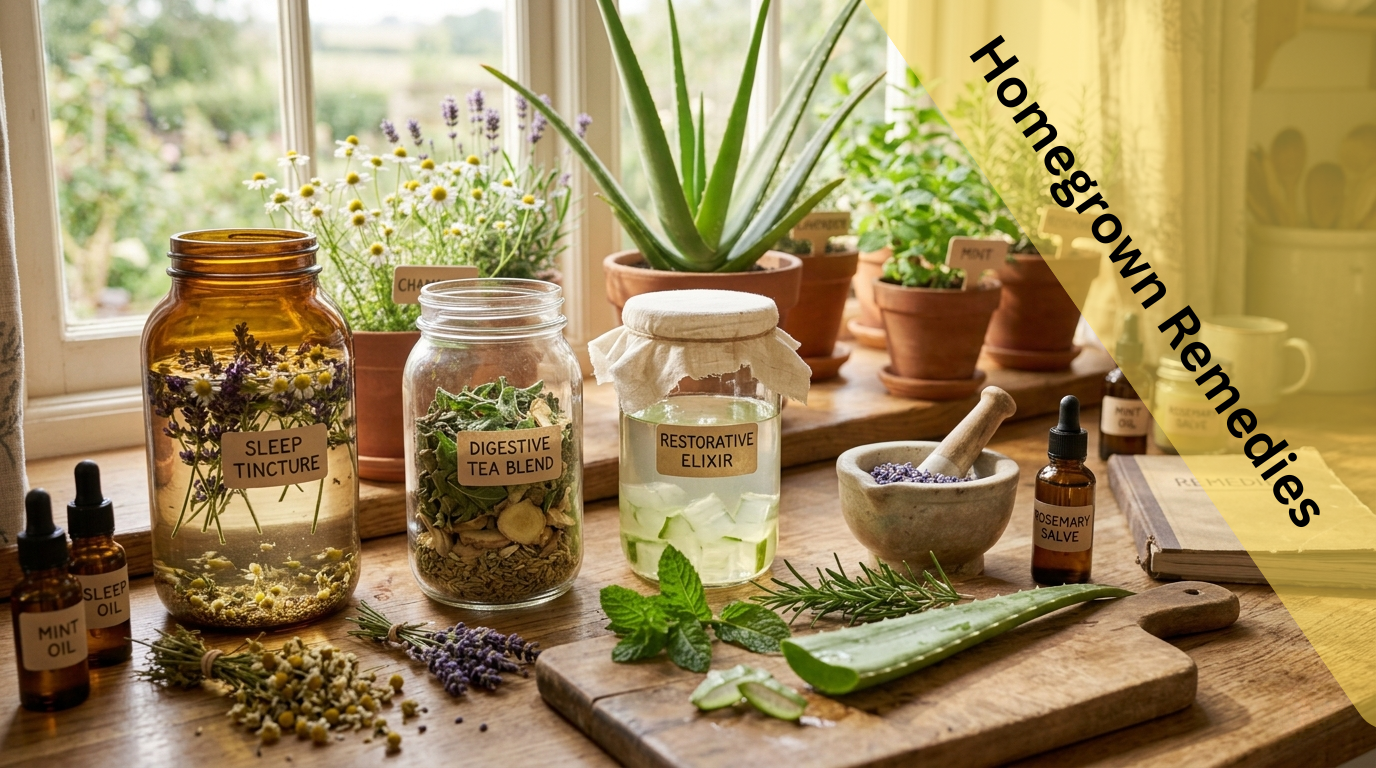
Aloe vera is the one plant I’d tell anyone to grow even if they hate gardening. Snap off a leaf, slit it open, and rub the clear gel directly on a minor burn or scrape.

I keep a pot of aloe on my kitchen windowsill for exactly this reason. It’s saved me more than a few times with stovetop burns.
Calendula salve, made from dried calendula flowers infused in oil, is what I use once a scrape has already scabbed over and just needs help healing without getting irritated by clothing rubbing on it. It’s slower to make since the flowers need to infuse in oil for a few weeks, but it lasts a long time once it’s done.
Bug Bites and Itchy Skin
Baking soda paste is the fastest fix I’ve found for mosquito bites. Mix a small amount of baking soda with a few drops of water until it forms a paste, dab it on the bite, and let it dry before rinsing off.
Plantain leaf, the common lawn weed and not the banana relative, works surprisingly well too. Crush a fresh leaf until it’s slightly wet, then press it against the bite. My kids think this one is funny because it’s technically a weed from the yard.
Trouble Sleeping
Chamomile tea before bed is the most well known homegrown remedy for a reason. It’s mild, it tastes pleasant, and it genuinely helps with the kind of restlessness that comes from an overactive mind rather than actual insomnia.
I grow German chamomile in a pot because it reseeds itself easily and needs almost no care. Full sun, average watering, and it comes back every year.
Lavender, used as a sachet near the pillow rather than as a tea, is more about the smell than any ingredient you consume. Some of my family swears by it. Others don’t notice a difference. Worth trying since it costs nothing but a few dried sprigs.
Seasonal Allergies
This is the one category where homegrown remedies help the least, and I want to be honest about that instead of oversell it.
Local honey gets recommended constantly for pollen allergies, and while some people report mild relief, the research on it is weak. I still keep it on hand because it’s useful for sore throats anyway, not because I expect it to fix allergies.
Nettle tea, made from dried stinging nettle leaf, has more research behind it as a mild antihistamine-like remedy. It won’t replace an allergy medication during a bad pollen week, but some people notice it takes the edge off.
According to the NIH National Center for Complementary and Integrative Health, evidence for most herbal allergy remedies is limited, and it’s worth talking to a doctor before relying on them for anything beyond mild symptoms.
Herbs Worth Growing at Home
If you’re starting from nothing, these five are the ones I’d plant first. All of them tolerate beginner mistakes.
- Mint – spreads aggressively, grows in partial shade, best kept in its own pot so it doesn’t take over a bed
- Chamomile – full sun, reseeds itself, needs very little watering once established
- Aloe vera – needs a sunny windowsill more than outdoor space, ideal for apartments
- Calendula – full sun, blooms most of the season, flowers are the useful part
- Sage – drought tolerant, survives neglect better than almost anything else on this list
When to Skip the Garden and Call a Doctor
Homegrown remedies are for mild, short-lived problems. None of this is a substitute for medical care when:
- A fever lasts more than two or three days
- A cut is deep, won’t stop bleeding, or shows signs of infection like spreading redness or pus
- A cough gets worse instead of better after a week
- Any allergic reaction involves swelling of the face, throat, or trouble breathing
- Symptoms affect an infant, a pregnant person, or someone on other medication
I learned this one the hard way with a “minor” cut that got infected because I trusted a salve for too long instead of going to urgent care on day two.
FAQs
Are homegrown remedies actually effective? Some are, for mild issues. Honey and ginger genuinely soothe a sore throat, and aloe helps minor burns heal. They work best as comfort and support, not as treatment for anything serious.
Is it safe to give homegrown remedies to kids? Most are safe in small amounts for children over one year old, but skip honey under age one and check with a pediatrician before giving anything herbal to a baby or toddler regularly.
What’s the easiest homegrown remedy to start with? Aloe vera. It needs almost no care, grows well indoors, and has one clear, well supported use for minor burns and scrapes.
Can homegrown remedies replace medication? No. They can ease mild symptoms, but they are not a replacement for prescribed medication or a doctor’s care, especially for anything chronic or serious.
Conclusion
Homegrown remedies won’t replace a pharmacy, and they’re not meant to. What they’ve given me is a slower first response to small problems instead of reaching for a pill bottle every time someone in my house sniffles.
Start with one plant. Aloe or mint are the easiest. See what you actually reach for, then build from there.
CTA: Grow one remedy plant this month and see which one earns a permanent spot in your garden.