

Last Updated: August 13, 2026
Author Note: I started paying attention to MyPlate about six years ago, back when a doctor’s visit turned into a lecture about portion sizes. I printed the plate graphic, stuck it on my fridge, and used it to plan dinners for my family for years. When I went looking for the calculator again this year to write this piece, it was gone. That sent me down a rabbit hole of what actually replaced it, which is most of what you’ll find below.
Table of Contents
- What Is a MyPlate Plan
- What Happened to MyPlate.gov in 2026
- The Five Food Groups, Broken Down
- How to Build Your Own Plate Without the Old Calculator
- A Real Dinner Table Example
- Mistakes Beginners Make
- Where MyPlate Falls Short
- FAQs
- Conclusion
What Is a MyPlate Plan
A MyPlate Plan is a personalized, calorie-based breakdown of how much food you need daily from each of the five food groups, based on your age, sex, height, weight, and activity level. USDA built it as a companion to the simple plate icon, turning a general “fill half your plate with produce” idea into actual numbers you could use for grocery shopping and meal prep.
Key Takeaway: The MyPlate icon still shows up everywhere, but the official calculator that generated a personalized plan was taken offline in January 2026. You can still build a plan, just not on MyPlate.gov anymore.
What Happened to MyPlate.gov in 2026
Here’s the part most articles on this topic haven’t caught up to yet.
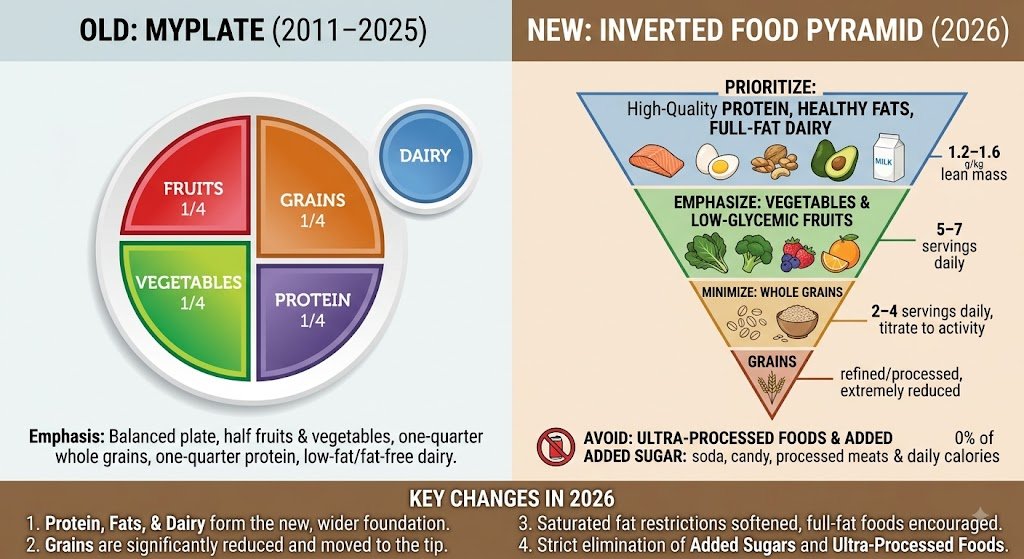
On January 7, 2026, USDA and HHS released the 2025–2030 Dietary Guidelines for Americans and retired the MyPlate.gov website. Visitors now get redirected to RealFood.gov, and the federal nutrition icon changed from the familiar plate to an inverted pyramid, with protein, dairy, healthy fats, fruits, and vegetables sharing the wide top and whole grains narrowing toward the bottom.
The interactive MyPlate Plan calculator that lived at myplate.gov/myplate-plan was removed and hasn’t been rebuilt on RealFood.gov. If you bookmarked it, that link is dead now.
MyPlate itself didn’t disappear completely. USDA’s Food and Nutrition Service still publishes MyPlate-branded materials for school meal programs through Team Nutrition, and the underlying food-group science behind the old plate hasn’t changed. It’s just no longer the government’s flagship consumer tool.
The Five Food Groups, Broken Down
Whether you’re using the old plate icon or the new pyramid, the same five groups show up. Here’s roughly how they split on a standard 2,000-calorie plate:
- Fruits — about 2 cups a day, fresh, frozen, canned, or dried
- Vegetables — about 2.5 cups a day, aiming for variety across dark greens, red and orange, beans, starchy, and other
- Grains — about 6 ounce-equivalents, with at least half coming from whole grains
- Protein foods — about 5.5 ounce-equivalents, covering meat, poultry, seafood, eggs, beans, nuts, and soy
- Dairy — about 3 cups a day, or fortified soy alternatives
Your own numbers will shift up or down depending on your calorie needs, which is exactly what a personalized plan is supposed to calculate for you.
How to Build Your Own Plate Without the Old Calculator
You’ve got three realistic options now that the official calculator is gone.
Use RealFood.gov’s newer tools. The site includes an AI meal-planning assistant that can walk you through a personalized breakdown, though it works differently than the old form-based calculator did.
Use an independent calculator built on the same public formulas. Sites like myplate.food rebuilt the MyPlate-style calculator using the same USDA equations and the 2020–2025 food pattern data, since that underlying math is public domain. Just know these are independent projects, not USDA-run.
Do the math yourself. USDA’s food pattern tables are still published. If you know your daily calorie target, you can look up the food-group amounts for that calorie level directly from the Dietary Guidelines document and skip the calculator entirely.
A Real Dinner Table Example
When I first built a plate for my own family, I overcomplicated it. I was measuring rice in grams and weighing chicken breasts like I was running a lab.
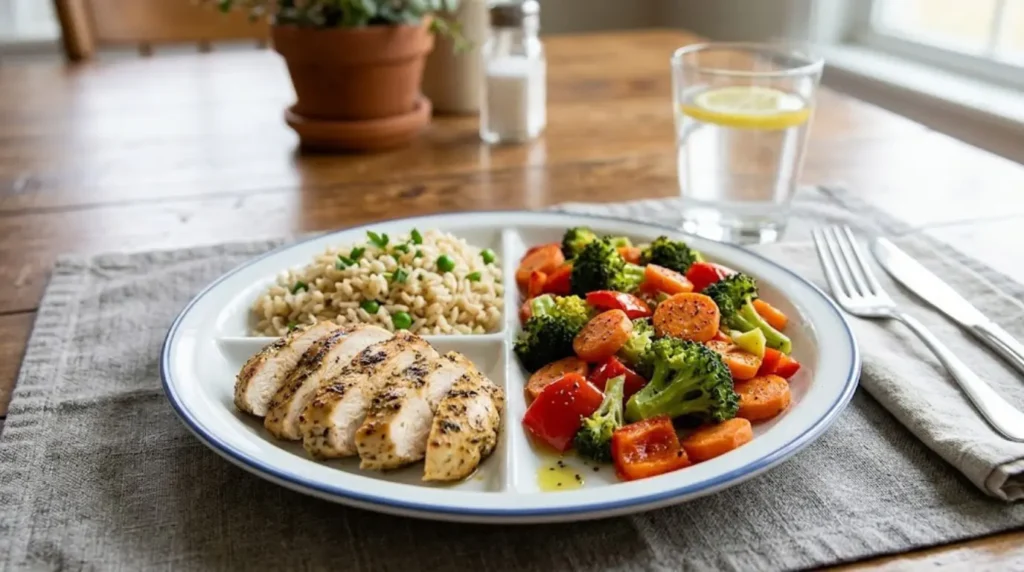
What actually stuck was simpler. I split our plates into quarters with a mental line, piled produce onto half, split the rest between a lean protein and a whole grain, and poured milk or water on the side. Some nights the vegetables were roasted, other nights they came straight out of a frozen bag. Consistency mattered more than precision.
That’s still the fastest way to apply any of this without opening a spreadsheet.
Mistakes Beginners Make
Treating all grains the same. A slice of white bread and a serving of brown rice both count as “grains,” but only one of them is whole grain. The plate icon never made that distinction clear, and it’s part of why the 2026 guidelines put more emphasis on it.
Ignoring beverages. MyPlate covers food groups, not sugary drinks, so it’s easy to build a “perfect” plate and still wash it down with something that undoes half the work.
Skipping variety within a group. Eating broccoli every single day technically satisfies your vegetable target, but you’ll miss out on the range of nutrients that come from rotating through different colors and types.
Where MyPlate Falls Short
It’s worth being honest about the limits here, since no single graphic can capture everything about nutrition.
The plate groups all protein sources together, so a portion of salmon and a portion of processed deli meat look identical on the icon, even though they’re not nutritionally equivalent. It does the same with dairy, and it doesn’t show added sugars, oils, or hydration at all. Harvard’s Healthy Eating Plate was actually developed partly as a response to these gaps.
The 2025–2030 guidelines address some of this by pushing protein and whole foods higher on the new pyramid, but no icon replaces reading an actual ingredient label.
FAQs
Is MyPlate still a real thing in 2026? The plate icon and its food-group science still exist and are used in school nutrition programs. The consumer-facing MyPlate.gov site and its personalized calculator were retired in January 2026.
How do I get a personalized MyPlate Plan now? Use RealFood.gov’s current tools, an independent calculator built on the same USDA formulas, or manually match your calorie target to the published food pattern tables.
Why did the government switch to a pyramid again? The 2025–2030 Dietary Guidelines introduced an inverted pyramid to put more visual emphasis on protein, healthy fats, and whole foods, and to push back against reliance on ultra-processed foods.
Do I need to follow MyPlate exactly to eat healthy? No. It’s a general framework, not a strict rulebook. Adjusting portions to your own calorie needs and food preferences matters more than matching the icon perfectly.
Conclusion
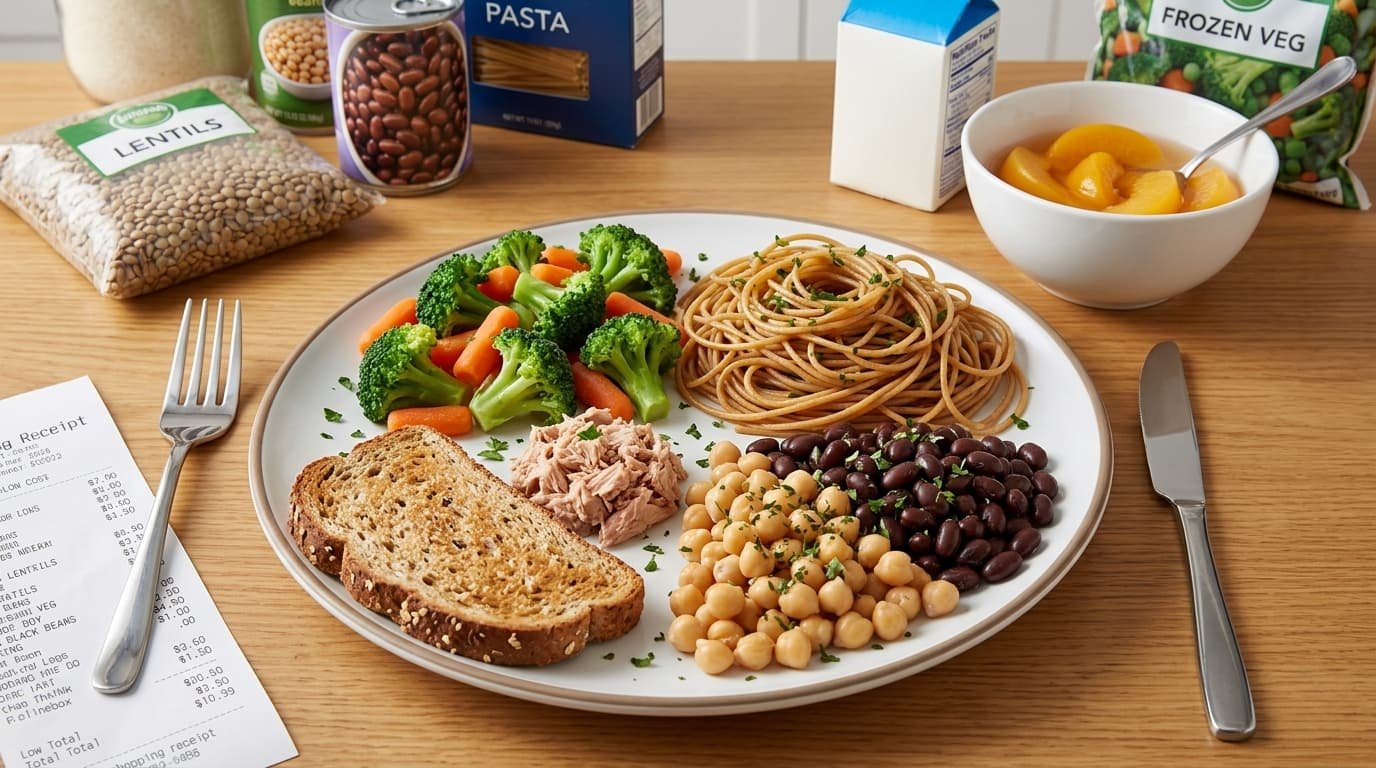
The plate on your fridge magnet still works as a rough guide, even though the government tool behind it moved. Build your plate around produce, a lean protein, a whole grain, and dairy or a fortified alternative, adjust the portions to your own calorie needs, and don’t stress over getting it exact every night.Balanced diet foods to keep in your kitchen
Disclaimer: This article is for general educational purposes and isn’t a substitute for personalized advice from a registered dietitian or your doctor, especially if you have a medical condition that affects your diet.