
Author Note: This article comes from three years of tracking my own meals, blood work, and energy levels while shifting toward whole-food eating, combined with a review of current nutrition research. It is written to share, not to replace advice from your own doctor or dietitian.
Table of Contents
- What Planet Nutrients Actually Means
- My Turning Point With Food
- The Food Groups Behind Planet Nutrients
- Mistakes Beginners Make
- What Experts Recommend
- The Trade-Offs Nobody Talks About
- How I Built a Simple Weekly Routine
- FAQs
- Conclusion and Next Step
What Planet Nutrients Actually Means
Planet nutrients are the vitamins, minerals, fiber, and healthy fats that come straight from whole plant foods instead of processed products or isolated supplements. Think beans, leafy greens, whole grains, nuts, and seasonal produce rather than a pill bottle.
The idea grew out of research on the Planetary Health Diet, a plant-forward eating pattern built by nutrition scientists at Harvard and the EAT-Lancet Commission. But you do not need to follow a strict diet plan to use the idea. You just need to understand which nutrients your body actually craves and where they naturally live.
My Turning Point With Food
For years my diet ran on convenience. Frozen meals, protein bars, whatever was fastest between work calls. My energy crashed every afternoon and my labs kept showing the same story, low fiber intake and creeping cholesterol.
A friend who works in functional nutrition told me something that stuck. She said most people are not deficient in willpower, they are deficient in real food. That one sentence sent me down a research hole that led straight to planet nutrients and the science behind whole-food eating.
I started small. One plant-based lunch a day, then two. Within six weeks my afternoon crash was gone and my next blood panel actually surprised my doctor.
The Food Groups Behind Planet Nutrients
Planet nutrients are not exotic. They come from food groups your grandparents probably ate more of than you do now.
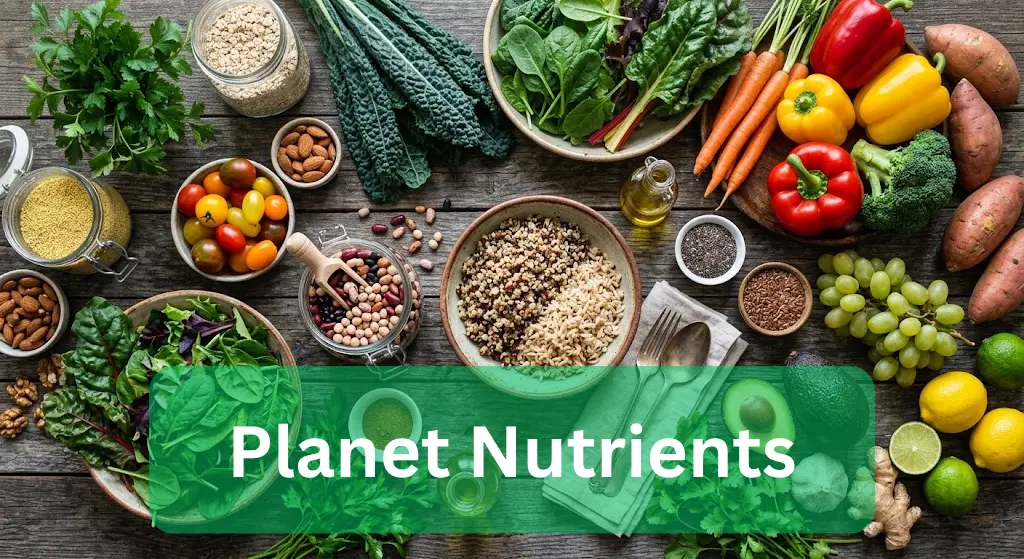
- Legumes: lentils, chickpeas, and black beans for fiber and plant protein
- Leafy greens: spinach, kale, and Swiss chard for folate and magnesium
- Whole grains: oats, quinoa, and brown rice for slow-burning energy
- Nuts and seeds: walnuts, chia, and flax for omega-3 fats
- Colorful produce: berries, peppers, and squash for antioxidants
Key Takeaway: You do not need a supplement aisle to hit most of your daily nutrient targets. A plate that is roughly half vegetables, a quarter whole grains, and a quarter plant protein covers the basics for most healthy adults.
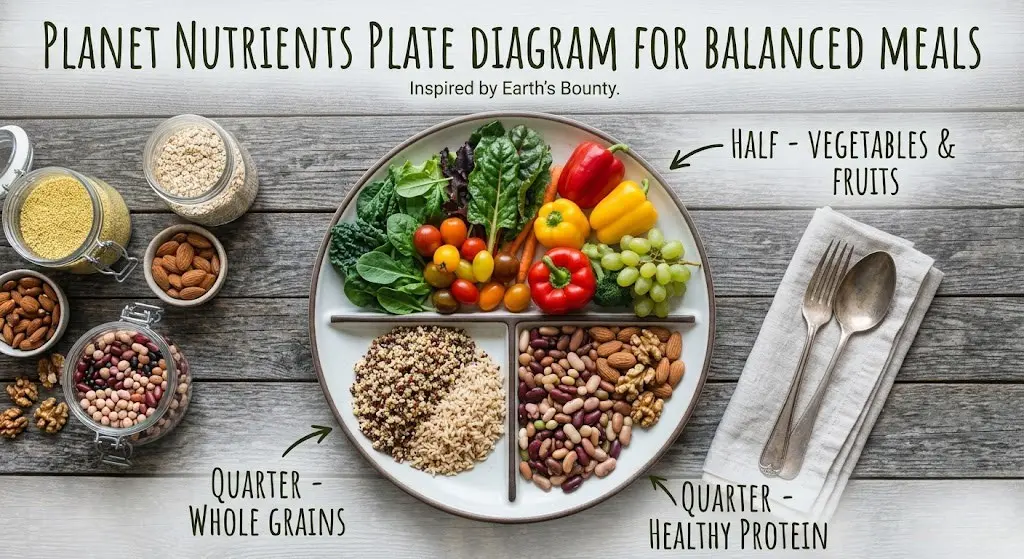
If you want a deeper breakdown of building balanced plates for everyday health, my full guide on building a nutrient-dense plate on Health for Life walks through it meal by meal.
Mistakes Beginners Make
I made every one of these before I figured out what worked.
Cutting out entire food groups at once. Going fully plant-based overnight usually backfires because your gut and your grocery habits both need time to adjust.
Ignoring vitamin B12. Research on the Planetary Health Diet has flagged this directly. As eating patterns shift toward more plants and less meat, B12 intake tends to drop, which matters for nerve and blood health.
Buying processed “plant-based” snacks. A vegan cookie is still a cookie. Planet nutrients come from whole foods, not from a marketing label.
Skipping protein at breakfast. This was my biggest one. Adding beans or eggs to my morning routine fixed the 11am energy crash faster than anything else I tried.
What Experts Recommend
Nutrition researchers are not asking anyone to eat perfectly. The general advice across recent studies is more forgiving than most diet culture makes it sound.
A 2025 study reviewed by the Institute for Functional Medicine found that higher adherence to a plant-forward eating pattern was linked to better cardiovascular and metabolic health, along with support for healthy aging, even among people who did not follow the diet perfectly.
Registered dietitians generally recommend starting with produce and legumes, adding two servings of fish per week for omega-3s, and treating meat as a side dish rather than the center of the plate. Small shifts, tracked consistently, tend to outperform dramatic short-term changes.
The Trade-Offs Nobody Talks About
Whole-food eating is not free of downsides, and pretending otherwise does not help anyone.
Cost and time. Fresh produce and dried legumes are often cheaper than packaged food, but the prep time is real. Batch cooking on Sundays solved this for me.
Nutrient gaps. As noted above, B12 and sometimes iron or omega-3s can dip on a heavily plant-based pattern. A basic blood panel once a year catches this early.
Social friction. Eating differently than everyone around you at work lunches or family dinners takes some getting used to. It gets easier once it becomes routine instead of a special diet.
How I Built a Simple Weekly Routine
I did not overhaul my kitchen overnight. Here is the rough shape of what actually stuck.
Sunday: Cook a big batch of grains and beans for the week. Weekdays: Build lunch around whatever vegetables are in the fridge plus a scoop of the batch-cooked base. Two nights a week: Fish or eggs for the B12 and omega-3 gap. Snacks: Nuts, fruit, or hummus instead of packaged bars.
That is the entire system. No app, no strict tracking, just a repeatable pattern that made planet nutrients the default instead of the exception.
For anyone building their own routine, my weekly meal prep checklist over on Health for Life has the exact grocery list I still use.
FAQs
What are planet nutrients? Planet nutrients are the vitamins, minerals, and healthy fats found naturally in whole plant foods like legumes, whole grains, leafy greens, and nuts, instead of processed foods or isolated supplements.
Are planet nutrients the same as the planetary health diet? Not exactly. The planetary health diet is a specific eating framework from the EAT-Lancet Commission, while planet nutrients simply refers to the nutrients you get from eating more whole, plant-based foods day to day.
Do I need to go fully vegan to get planet nutrients? No. Most people benefit from shifting the ratio toward more plants while still including fish, eggs, or lean meat a few times a week to cover nutrients like B12.
What nutrient gap should I watch for? Vitamin B12 is the most commonly cited gap in plant-forward eating patterns, along with iron and omega-3 fats in some cases. A yearly blood panel is the simplest way to check.
How fast will I notice a difference? Many people notice steadier energy within four to six weeks of consistently eating more whole plant foods, though individual results depend on starting diet and overall health.
Conclusion and Next Step
Planet nutrients are not a trend or a product. They are simply the nutrition your body gets when real, whole food makes up most of your plate. Start with one meal a day, watch your B12 and iron if you lean heavily plant-based, and let the routine build itself over a few months the way mine did.
If you want the exact grocery list and weekly routine I use, check out the Health for Life meal planning guide at www.healthforlifee.com for a printable version you can start this week.
Disclaimer: This article is for general informational purposes only and does not replace personalized medical or nutritional advice. Talk to your doctor or a registered dietitian before making major changes to your diet, especially if you have an existing health condition.