
Author Note: Reviewed by the Health for Life training team, coaches who have spent years programming bodyweight strength routines for beginners and put every exercise below through real workouts before writing about them.
Table of Contents
- Why I Stopped Skipping Leg Day
- What Calisthenics Leg Training Actually Does
- The 7 Exercises That Made the Biggest Difference
- Mistakes I Made So You Don’t Have To
- A Simple Beginner Routine
- How Often You Should Train Legs
- FAQs
- Conclusion
Why I Stopped Skipping Leg Day
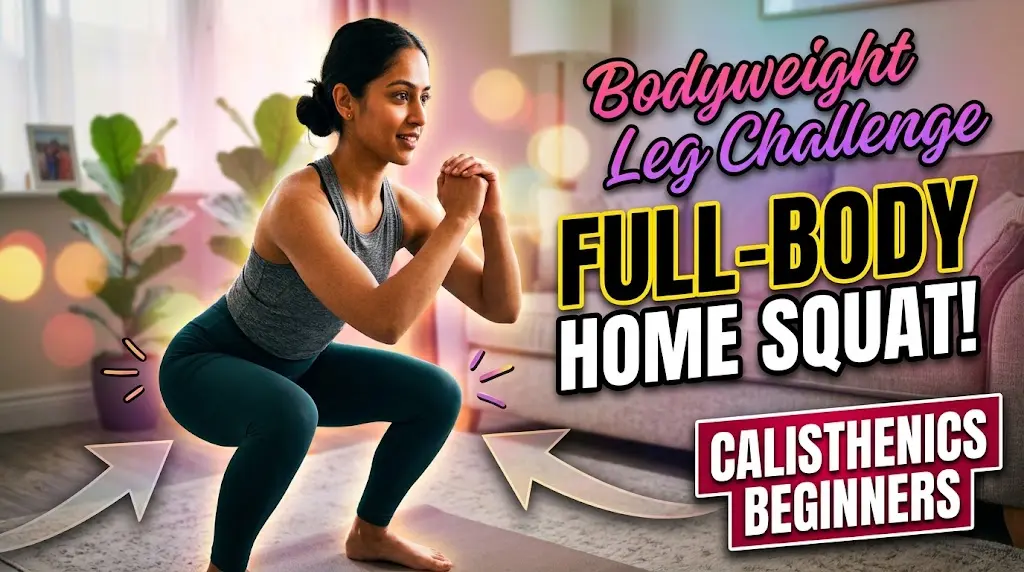
Calisthenics leg exercises are the fastest way to build real lower body strength without touching a single dumbbell, and I learned that the hard way after two years of only training my upper body. I could do pull ups all day and my legs still looked like an afterthought. Stairs made me winded. My squat form was a mess. That embarrassment is what actually got me training legs seriously.
I started with the basics because pride gets you injured fast. No box jumps, no pistol squats on day one. Just squats, lunges, and a lot of shaky wall sits. Within a few weeks my knees stopped clicking and my balance improved enough that I noticed it walking down stairs.
What Calisthenics Leg Training Actually Does
Your legs carry your entire body weight through almost everything you do, so calisthenics gives them plenty to work with even without added load. Squats, lunges, and step ups build the same muscles a barbell would, just through a different kind of resistance.
Key takeaway: You do not need weights to build noticeably stronger legs. You need consistent tension, full range of motion, and a plan you actually follow.
A Sports journal study from early 2025 found that a twelve week body weight resistance program improved lower body strength and balance in older adults, which says a lot considering that group typically has the hardest time building muscle. If body weight training works there, it will work for a healthy adult starting from scratch.
The trade-off is honest: calisthenics legs takes longer to build serious size compared to heavy barbell work, and progressing past a certain point gets tricky without added resistance like a weighted vest. For general strength, mobility, and muscle tone, that trade-off barely matters.
The 7 Exercises That Made the Biggest Difference
1. Bodyweight Squat
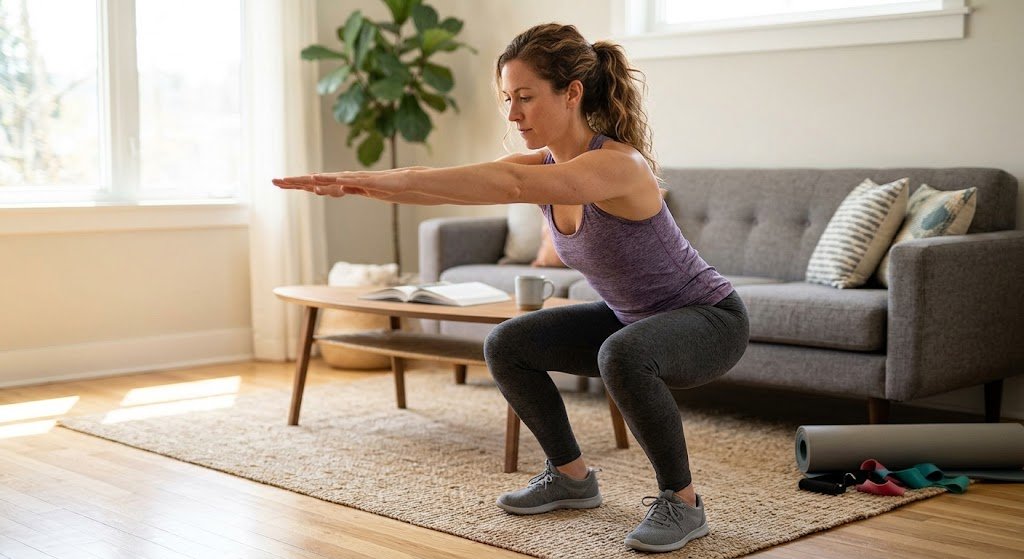
Stand with feet shoulder width apart, toes turned out slightly. Push your hips back and bend your knees until your thighs are close to parallel with the floor, then drive through your heels to stand. This is the base movement everything else builds on.
2. Reverse Lunge
Step one foot backward and lower until both knees form roughly 90 degree angles. Push off the back foot to return to standing. Reverse lunges are gentler on the knees than forward lunges and easier to control for beginners.
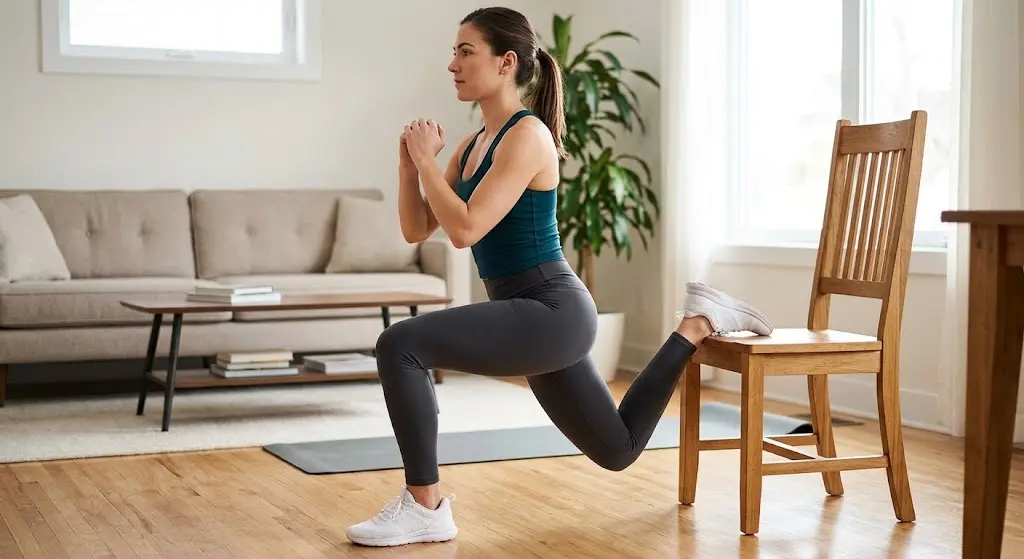
3. Bulgarian Split Squat
Rest your back foot on a chair or low step behind you and lower your front leg into a lunge. This single leg move exposes any strength imbalance between your left and right side fast, usually within the first set.
4. Glute Bridge
Lie on your back with knees bent and feet flat. Squeeze your glutes and lift your hips until your body forms a straight line from shoulders to knees. Hold briefly at the top before lowering. This one fixes weak glutes that squats alone often miss.
5. Step Up
Using a sturdy box or bench, step up with one leg, pressing through the heel, then bring the other foot up to stand tall. Step back down with control. Step ups build single leg strength that carries directly into running and stairs.
6. Wall Sit
Slide your back down a wall until your knees hit roughly 90 degrees and hold. It looks easy until you hit the thirty second mark. Wall sits build the kind of endurance strength that regular sets and reps do not train as directly.
7. Calf Raise
Stand on the edge of a step, rise onto your toes as high as possible, then lower your heels below the step edge for a full stretch. Calves get ignored constantly and it shows up as ankle instability later.
Mistakes I Made So You Don’t Have To
My knees used to cave inward on every squat and I did not notice until a friend filmed me. Watch your knees track over your toes, not collapsing inward. I also used to rush every rep, which trains momentum instead of muscle. Slowing down the lowering phase changed my results more than any single new exercise did.
Skipping single leg work was another one. Two-legged squats can hide a weaker side for months. Bulgarian split squats and step ups exposed mine within a week.
A Simple Beginner Routine
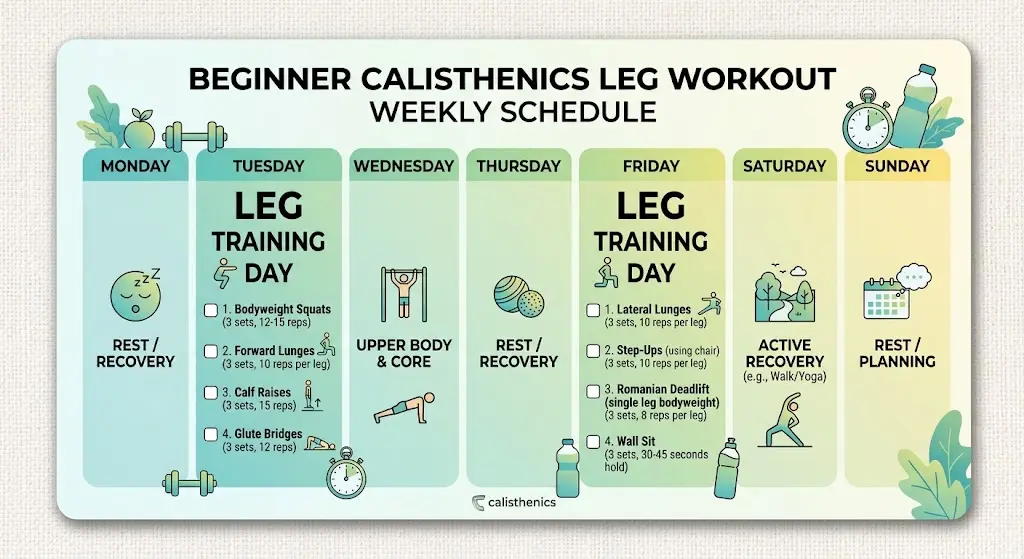
Do this two to three times a week with a rest day between sessions.
- Bodyweight squat, 3 sets of 12
- Reverse lunge, 3 sets of 10 per leg
- Glute bridge, 3 sets of 15
- Wall sit, 3 sets of 30 seconds
- Calf raise, 3 sets of 15
Warm up for five minutes with easy marching or bodyweight squats before starting, and stretch your quads, hamstrings, and calves afterward.
For a full breakdown of how strength training habits fit into general wellness, check out our general fitness and wellness guide] over on Health for Life, where we cover training, recovery, and everyday health habits side by side.
How Often You Should Train Legs
Two to three sessions a week works well for most beginners, with at least one rest day between sessions so muscles can recover. Training every single day without rest slows progress rather than speeding it up, since strength gains actually happen during recovery, not during the workout itself.
FAQs
Can calisthenics build real leg muscle without weights? Yes. Bodyweight squats, lunges, and single leg exercises like the Bulgarian split squat create enough resistance to build real strength and muscle tone, especially for beginners and intermediate lifters.
How long before I see results from calisthenics leg training? Most beginners notice better balance and less soreness within two to three weeks, with visible strength and tone improvements showing up around six to eight weeks of consistent training.
Do I need equipment for calisthenics leg exercises? No equipment is required for most of these moves. A sturdy chair, step, or low bench helps with step ups and Bulgarian split squats, but you can start with just floor space.
What is the hardest calisthenics leg exercise? The pistol squat is widely considered the toughest, since it demands single leg strength, balance, and ankle mobility all at once. Building up through squats, lunges, and split squats first makes it far more achievable.
Conclusion
Calisthenics leg exercises turned my weakest body part into one I stopped avoiding, and the results came from consistency rather than anything fancy. Start with the seven moves above, fix your form before adding difficulty, and give your legs the same attention you give the rest of your body.
CTA: Ready to build a stronger lower body starting today? Save this routine, pick two training days this week, and check out more strength and wellness guides at www.healthforlifee.com.