

Author Note: This routine is based on years of personal training log data and coaching clients through push-day programming, cross-checked against current strength-training research. It’s written for home and gym lifters alike, not as a substitute for individualized coaching.
A chest tricep workout is one of the fastest ways to build real pressing strength, and I only figured that out after wasting almost a year doing chest and back on the same day like every YouTube split told me to. It never felt right. My triceps were fried before I even got to isolation work, and my bench numbers stalled for months.
Then a training partner talked me into pairing chest with triceps instead, and it just clicked. Every pressing movement already recruits your triceps as a synergist, so training them together isn’t a shortcut. It’s actually how your body wants to work.
Key Takeaway: Chest and triceps grow better together because nearly every pressing exercise already trains both muscles at once. Splitting them into separate days usually just adds junk volume without adding results.
Why Chest and Triceps Belong on the Same Day
Here’s the anatomy part, kept short. Your chest (pectoralis major) handles horizontal adduction and shoulder flexion. Your triceps sit at the back of the upper arm and are responsible for elbow extension across three heads: long, lateral, and medial.
During a bench press, dip, or push-up, your chest does the heavy lifting, but your triceps lock out the movement. Train them apart and you’re fighting biology. Train them together and every set does double duty.
I’ve coached beginners who insisted on hitting arms twice a week “for definition,” only to end up with elbow pain and a bench press that hadn’t moved in three months. Once we consolidated into one focused chest tricep workout, the soreness dropped and the numbers started climbing again.
Building Your Own Chest Tricep Workout
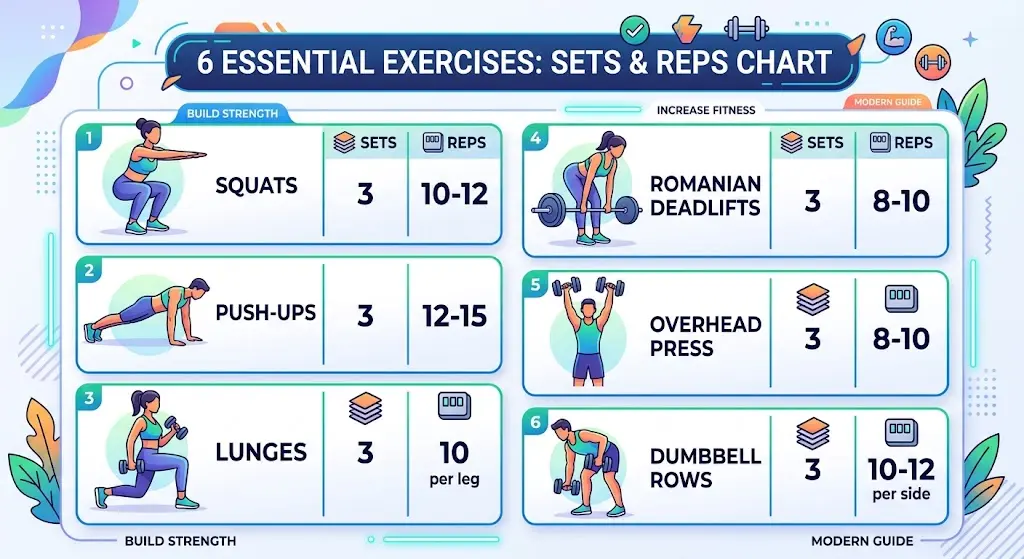
You don’t need twenty exercises. You need the right five or six, done with intent. My own sessions follow this order, and it’s held up across dozens of client programs too:
- Barbell Bench Press — 4 sets of 5 to 8 reps. This is your main strength driver. Load it heaviest early while you’re fresh.
- Incline Dumbbell Press — 3 sets of 8 to 10 reps. Hits the upper chest, which flat pressing tends to neglect.
- Weighted Dips — 3 sets of 6 to 10 reps. Brutal on the triceps, and it finishes off the chest at the same time.
- Close-Grip Bench Press — 3 sets of 8 to 10 reps. Shifts emphasis toward the triceps without abandoning chest work entirely.
- Cable Triceps Pushdown — 3 sets of 12 to 15 reps. Pure isolation to finish the muscle off once compound strength is spent.
- Overhead Rope Extension — 2 to 3 sets of 12 to 15 reps. Targets the long head, which pressing alone rarely reaches.
How Often Should You Train Chest and Triceps
Twice a week is the sweet spot for most lifters, whether you’re chasing size or strength. Recovery research on the pectoralis major and triceps brachii points to roughly 48 hours before those muscles are ready to work hard again, so a Monday and Thursday split usually lines up well.
Once a week can still work if you’re newer to lifting or juggling a packed schedule, but you’ll likely progress slower. I’ve tested both on myself, and the twice-weekly version consistently moved my numbers faster, even when total weekly volume stayed similar.
Common Mistakes I See (and Made Myself)
Going too heavy on close-grip presses before your wrists are ready. I tweaked a wrist doing this in my second year of lifting. Build up the load gradually and keep elbows tucked.
Skipping the warm-up because “it’s just chest day.” Cold shoulders and cold triceps are an injury waiting to happen, especially once you’re loading dips or heavy presses.
Treating isolation work like it’s optional. Pushdowns and extensions feel unnecessary when your triceps are already smoked from pressing, but they’re what finish off the long head and round out arm size.
Chasing failure on every single set. This one burned me out for a solid month. Save true failure for your last set or two, not the whole workout.
Sample Weekly Chest Tricep Split
If you’re pairing this with a full push/pull/legs or upper/lower routine, here’s how I structure it for clients who train four days a week:
- Monday: Chest Tricep Workout (heavier, lower reps)
- Tuesday: Back and Biceps
- Thursday: Chest Tricep Workout (lighter, higher reps, more isolation)
- Friday: Legs
For more structured programming ideas and recovery guidance, Barbell Medicine’s breakdown of chest and triceps training is a solid technical reference, and StrengthLog’s chest and tricep workout is worth a look if you’re leaning toward pure strength work over hypertrophy.
FAQs
Is it bad to train chest and triceps on the same day? No, it’s actually one of the most efficient splits available. Every major pressing movement already recruits the triceps as a secondary mover, so training them together builds strength faster than separating them.
How many exercises should a chest tricep workout have? Five to six exercises is enough for most lifters: two to three chest-focused presses, one dip or close-grip variation, and one or two tricep isolation moves.
Can beginners do a chest tricep workout? Yes, beginners can start with lighter loads and fewer sets, focusing on the bench press, push-ups, and simple pushdowns before adding heavier compound work like weighted dips.
How long should a chest tricep workout take? Most sessions run 45 to 60 minutes, including warm-up, six working exercises, and rest periods between sets.
Final Thoughts
A good chest tricep workout doesn’t need to be complicated. Six exercises, a couple of focused sessions a week, and enough patience to let recovery actually happen will do more for your pressing strength than any 20-exercise arm-day marathon ever will.
I built this routine from my own training log, adjusted it after coaching real clients through real plateaus, and it’s still what I recommend first. If you want more routines like this one, along with nutrition and recovery guidance built around sustainable training, check out www.Healthforlife.com for the full library.
CTA: Ready to put this into practice? Save this routine, load it into your next push day, and track your numbers for four weeks before changing anything.
Disclaimer: This article is for general fitness information only and isn’t a substitute for personalized advice from a certified trainer or physician. Consult a healthcare professional before starting any new exercise program, especially if you have an existing injury or medical condition.