
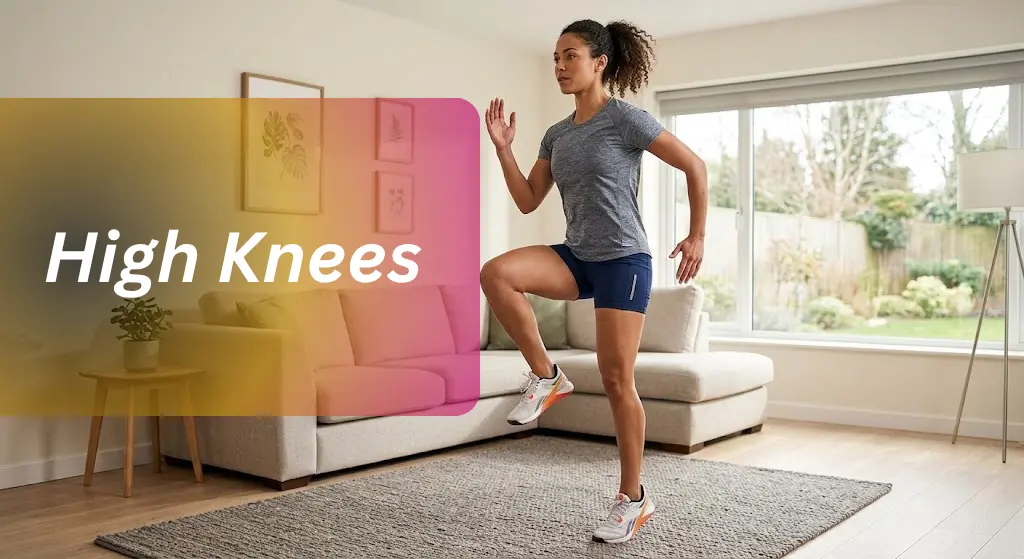
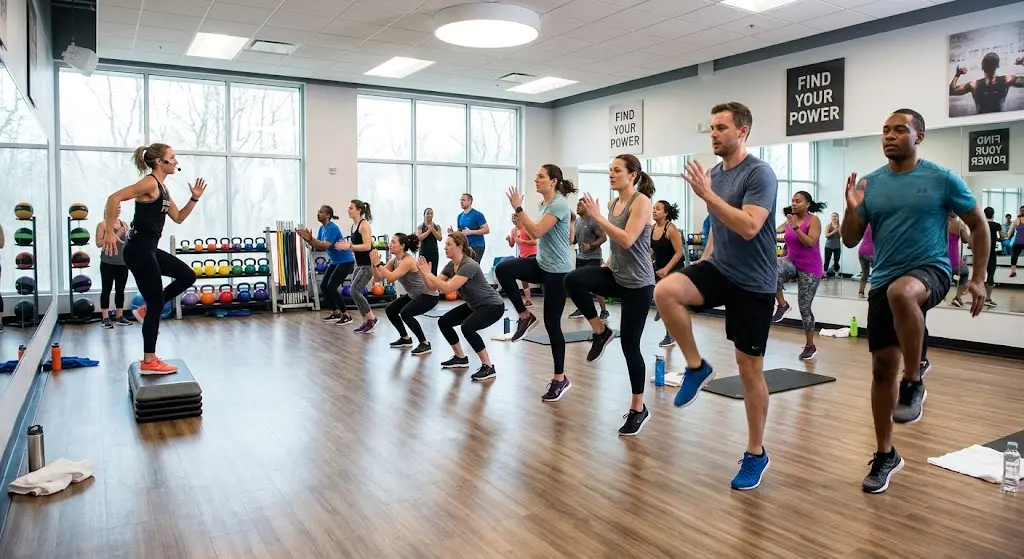
High knees is a calisthenics drill that has you running in place while driving each knee up to hip height as fast as you can hold good form. No equipment. No gym. Just your own bodyweight and a patch of floor. It works as a warm-up, a HIIT interval, or a standalone cardio finisher, depending on how you slot it into your day.
Why I Added High Knees to My Mornings
I used to skip warm-ups entirely. Bad habit, I know. Then a knee tweak during a rushed 5K forced me to slow down and actually prep my body before running. A physical therapist gave me a short list of drills. High knees sat right at the top.
The first week felt awkward. My arms and legs refused to move in rhythm. By week two, something clicked. My heart rate climbed within seconds, my hips loosened up, and my actual runs felt smoother from the first stride.
I started tracking every session in a notebook, then moved that tracking over to our own workout library at healthforlifee.com, where we log form cues and rep counts for readers who want the same structure without guessing. That habit is still running strong two years later.
Micro-hook: A single minute of high knees can raise your heart rate as fast as a much longer jog warm-up, which is why runners and coaches lean on it so often.
High Knees Benefits Worth Knowing
High knees benefits stack up fast for a move that takes zero setup.
- Calorie burn. Depending on your weight and pace, high knees can burn somewhere between 7 and 15 calories a minute, with vigorous effort sitting at the top of that range.
- Full lower body activation. Quads, hamstrings, glutes, calves, and hip flexors all fire with every rep.
- Core engagement. Your abs and obliques stabilize your trunk the entire time, so your core gets worked without a single crunch.
- Fast cardio spike. Heart rate and breathing rate climb within seconds, which makes this one of the quickest ways to hit a vigorous-intensity zone.
- Coordination and agility. Alternating arm and knee drive trains the same rhythm you use in running and many field sports.
The Healthline overview of high knees benefits backs up the muscle activation list above and is worth a read if you want the deeper anatomy breakdown.
How to Do High Knees With Proper Form
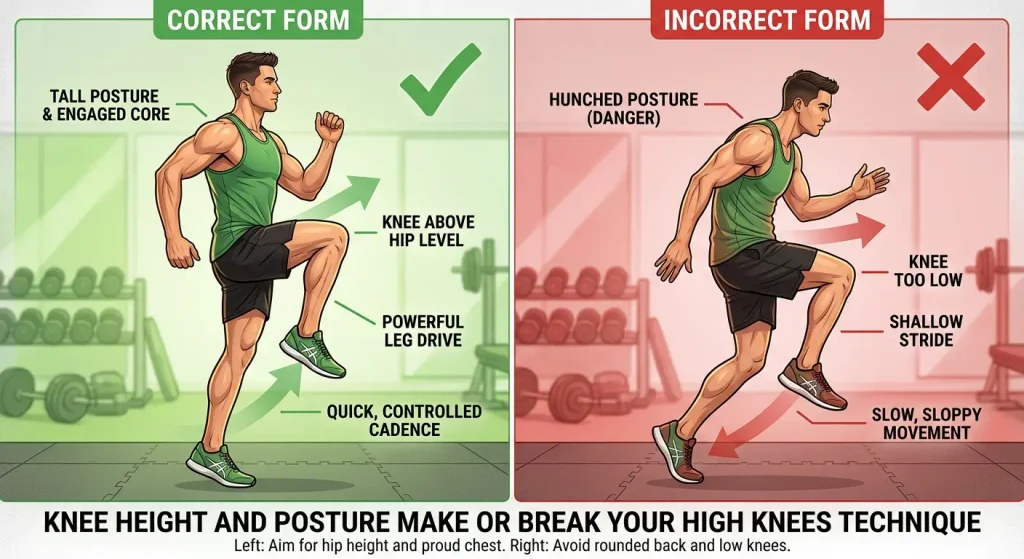
Direct answer: Stand tall, drive one knee to hip height while pumping the opposite arm, plant that foot quickly, then repeat on the other side at a controlled but quick pace, keeping your chest lifted and your core braced the whole time.
Step by step:
- Stand with feet hip-width apart and arms bent at 90 degrees.
- Drive your right knee up until your thigh is parallel to the floor.
- Swing your left arm forward as the knee rises, mirroring a running motion.
- Land softly on the ball of your foot and immediately drive the left knee up.
- Keep your torso upright. Do not lean back or hunch forward.
- Hold a quick, steady cadence for 20 to 40 seconds, then rest.
High Knees for Beginners
New to this move? Slow it down before you speed it up.
- March in place first, lifting knees only to waist height, for 30 seconds.
- Hold onto a wall or chair if balance is shaky.
- Build up to 20 second bursts before chasing longer sets.
- Rest twice as long as you work until your conditioning catches up.
High Knees Jump and Military High Knees Variations
Once basic form feels natural, these variations add intensity without adding equipment.
- High knees jump: Add a small hop between each knee drive for a bigger cardio and calf-strength hit.
- Military high knees workout: Combine high knees with mountain climbers and burpees in a rotating circuit, a format borrowed from basic training conditioning drills.
- High knees skip: Hop on one leg while driving the opposite knee up, then switch, building single-leg power.
- Speed drill version: Shrink your ground contact time and push cadence as high as form allows for short 10 to 15 second bursts, useful for sprinters working on turnover.
High Knees Warm-Up and Cardio Circuits
As a high knees warm-up, 3 rounds of 20 seconds on and 20 seconds off gets your legs and lungs ready for a run, a lift, or a sport practice in under five minutes.
As a standalone high knees cardio session for weight loss, try this circuit three times through:
- High knees, 40 seconds
- Bodyweight squats, 40 seconds
- Rest, 20 seconds
- Jumping jacks, 40 seconds
- Rest, 20 seconds
High Knees vs Jump Rope
Both are cheap, portable, and brutal on the lungs. Here is how they actually compare.
| Factor | High Knees | Jump Rope |
|---|---|---|
| Equipment needed | None | Rope |
| Average calorie burn per minute | 7 to 15 | 10 to 16 |
| Joint impact | Moderate | Moderate to high |
| Learning curve | Very low | Low to moderate |
| Best for | Warm-ups, HIIT finishers | Steady cardio, footwork |
| Space needed | Minimal | Slightly more (rope swing) |
Micro-hook: If your ceiling height or floor space rules out a jump rope, high knees delivers a similar cardio spike with zero gear.
The 4-Week High Knees Progression Plan
A practical block you can follow without guesswork. Rest 30 to 60 seconds between sets throughout.
| Week | Sets | Work Time | Focus |
|---|---|---|---|
| 1 | 3 | 20 sec | Form and posture |
| 2 | 4 | 25 sec | Cadence increase |
| 3 | 4 | 30 sec | Adding the jump variation |
| 4 | 5 | 30 sec | Full speed drill intervals |
Common Mistakes and Safety Tips
- Leaning back. This strains your lower back. Keep your ribs stacked over your hips.
- Slapping the ground. Loud, flat-footed landings mean you are absorbing shock through your joints instead of your muscles. Land softer, on the ball of your foot.
- Skipping the knee height. Knees that barely rise above hip level cut the cardio and muscle benefit way down.
- Doing it on a hard, unforgiving surface. A mat or grass reduces joint stress compared to concrete.
According to the CDC’s physical activity guidelines for adults, most people need 150 minutes of moderate activity or 75 minutes of vigorous activity a week, and a few short high knees sessions can help close that gap fast. The American Heart Association’s aerobic activity recommendations echo the same targets and note that vigorous bouts count double toward your weekly minutes.
FAQs
How many calories does high knees burn per minute? Most people burn somewhere between 7 and 15 calories a minute doing high knees, with the higher end reserved for max-effort pace and heavier body weights.
Is high knees a good cardio exercise for weight loss? Yes. High knees raises your heart rate quickly and burns calories fast, which makes it a solid piece of any weight loss routine when paired with a calorie-aware diet.
How do I do high knees with proper form? Stand tall, drive each knee to hip height, pump your opposite arm, and land softly on the ball of your foot while keeping your chest lifted the entire time.
Can beginners do high knees every day? Beginners can do short, low-intensity sets most days, but full speed sessions are better limited to 3 to 4 times a week to let your joints and muscles recover.
What is the difference between high knees and jump rope? High knees needs zero equipment and has a lower learning curve, while jump rope tends to burn slightly more calories per minute but demands more coordination and ceiling space.
How long should a high knees warm-up last? Three rounds of 20 seconds on and 20 seconds off, around four to five minutes total, is enough to raise your heart rate before a run or lift.
Final Word
High knees earns its spot in warm-ups and HIIT circuits because it asks for nothing but floor space and gives back a fast heart rate, engaged legs, and a genuinely tired core in under a minute. Start slow, build your cadence, and let the 4-week plan above do the rest. For more form breakdowns and calculator tools built the same way, our full library sits at healthforlifee.com.
Disclaimer: This article is for general informational purposes only and is not a substitute for professional medical advice. Talk to your doctor before starting any new exercise routine, especially if you have joint pain, a heart condition, or are pregnant.